

People tend to think of the launches of Pokémon Red and Blue, in 1998 for the North Americans and in 1999 for the Europeans, as the start of Pokémon. Or perhaps even in 1996, with the launch of Pocket Monsters: Red and Green, if any fans are reading from Japan.
However, the truth is, that Pokémon was starting to emerge much earlier than this. Indeed, 1990 was the year that the founding fathers of Pokémon, Satoshi Tajiri, and Ken Sugimori, made their pitch for a game called Capsule Monsters to Nintendo. And, even earlier than this, Satoshi started having the original ideas for Pokémon way back in his childhood when he was known as Doctor Bug amongst his friends.
Table of Contents
Finding Pokémon in Real Life
This takes us neatly on to how exactly the idea for Pokémon was first come up with. Indeed, it must have taken quite the imagination to dream up this now-huge franchise!
Creature Collecting with Doctor Bug

In 1999, Satoshi Tajiri gave a fascinating interview to TIME. In particular, he spoke about his early childhood and his hobby of collecting bugs. It was a popular activity amongst him and his friends, but Satoshi was the most prolific. He even earned himself the nickname “Doctor Bug”. Satoshi then goes on to elaborate on this bug collecting as being one of the founding ideas behind Pokémon:
“Places to catch insects are rare because of urbanization. Kids play inside their homes now, and a lot had forgotten about catching insects. So had I. When I was making games, something clicked and I decided to make a game with that concept. Everything I did as a kid is kind of rolled into one – that’s what Pokémon is. Playing video games, watching TV, Ultraman with his capsule monsters – they all became ingredients for the game.”
An Obsession with Ultraman
The end of this quote brings us to the second key element in Satoshi’s inspiration for Pokémon: Utraman and his Capsule Kaiju. Ultraman is a huge TV series in Japan that was originally released in 1966 and is still running today. It is one of the best-known examples of the Daikaiju genre, made popular in the North American and European markets by Godzilla.
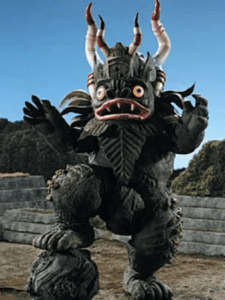
The Ultramen are an advanced race of humans who travel the universe protecting other cultures from alien threats. When on other planets, the Ultramen take on the form of local people and can only transform into their powerful Ultraman form in times of great peril.
In the third season of Ultraman, called Ultraseven, the show introduced the Capsule Kaiju. These are monsters kept by Ultramen in capsules that can be released to aid them in battle. This photo shows the Capsule Kaiju called Miclas and the below video shows him in action.
It is clear to see that Satoshi combined these 2 big influences from his childhood to create the foundations of Pokémon. However, it would still be a long time until this idea was fully realized into the Pokémon that we know today.
Early Entrepreneurial Spirit
To start a game like Pokémon, it is no surprise that those behind it were extremely entrepreneurial. Indeed, from an early age, they were starting their own businesses and starting to make those connections that would be the foundations of Pokémon.
The Game Freak Magazine

In the early 80s, shortly after leaving school, Satoshi launched a self-published magazine called Game Freak. In this magazine, he’d publish all sorts of reviews and tips to help gamers beat games in different ways. The Game Freak magazine is how Satoshi would eventually come to team up with Ken Sugimori.
Ken came across the magazine at a stall and was instantly impressed. He soon joined Game Freak as the lead illustrator with Satoshi being the editor. The early Game Freak magazine was done by hand, with pages stapled together. It soon grew in popularity and they invested in a printing machine which helped them sell 10,000 copies in their most popular issue on the game called Zabius. Eventually, they became tired of writing about games and decided they wanted to develop their own.
The Game Freak Video Game Company
In 1989 the pair teamed up with Junichi Masuda, who was hired as a game music composer and launched Game Freak as their own video game company. The team went to work quickly and launched their first video game called Mendel Palace for the NES in the same year.

It was also at this time that Satoshi first came across the Game Boy and its link cable functionality. People could connect two Game Boys with the cable and play the same game together. In his interview with TIME, Satoshi said:
“I saw Game Boy when it was first released. The idea for Pokémon clicked in my mind […] The communication aspect of Game Boy […] That cable really got me interested. I thought of actual living organisms moving back and forth across the cable.”
This is when everything clicked together for Satoshi, the bugs, Ultraman, the Game Boy cable, and the idea for Pokémon was formed.
Pokémon’s Difficult Start
Of course, going from an idea to a realized product is never easy and Pokémon was no different. Indeed, the team faced many challenges that they had to overcome before Pokémon would get off the ground.
The Pitch
In 1990, after coming up with the idea, the team at Game Freak put together a pitchbook to present to Nintendo. The original working name of the game was Capsule Monsters, apparently inspired by Japanese gashapon machines and the Capsule Kaiju from Ultraman.
In 2018, the pitchbook appeared in a Japanese TV show on NHK. This released a trove of original designs from the pitch. On the cover of the pitchbook, we can see a very early concept design of 2 Capsule Monsters battling as a trainer watches on. In the pitchbook, there were several more illustrations from Ken Sugimore.
These included sketched sprite sheets of early Capsule Monster designs featuring Slowbro and Rhydon; a concept sketch of how the capsules would work; and an early map of Kanto.
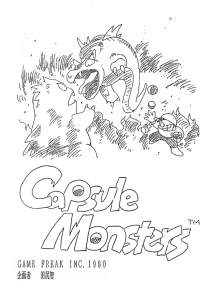
Unfortunately, the original pitch was rejected by Nintendo. However, with some further revisions and a renaming to Pocket Monsters due to copyright issues, the game was given the go-ahead. With some funding and a little mentorship, the Game Freak team set off to start developing Pocket Monsters.
Production
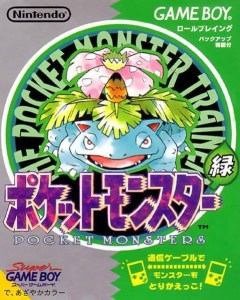
Production of the game was incredibly difficult for the team at Game Freak. They found themselves underfinanced and under-resourced. To keep the money coming in, they had to continue producing smaller games at the same time. These included several popular titles such as Pulseman and Yoshi.
During this time, many staff would leave for other jobs with the team working incredibly long hours. Eventually, however, the hard work paid off. Almost 6 years after production began, the games were finally released in Japan on 27 February 1996. The name was eventually shortened to Pokémon upon its release in North America on 28 September 1998. Incredibly, these games still remain the Best Selling Pokémon Games Ever.
The Rest is History
Fast forward to the 25th Anniversary of Pokémon, and the game is now one of the most popular ever released. It has spawned numerous spin-offs, from Pokémon Go to the Trading Card Game. And despite fierce competition from other monster-taming games such as Palworld and Temtem, popularity is showing no sign of letting up with release after release of Pokémon game continuing to prove its enduring appeal.
More of our Favorite Games
Join our Community
Join our community to be kept up to date on all the latest gaming news, reviews and guides, and other lists of the best Mobile Phone Games available.
This was such an interesting read. I’ve never thought about where the original ideas came form
Thanks, I always enjoy looking up the origins of massive games 🙂